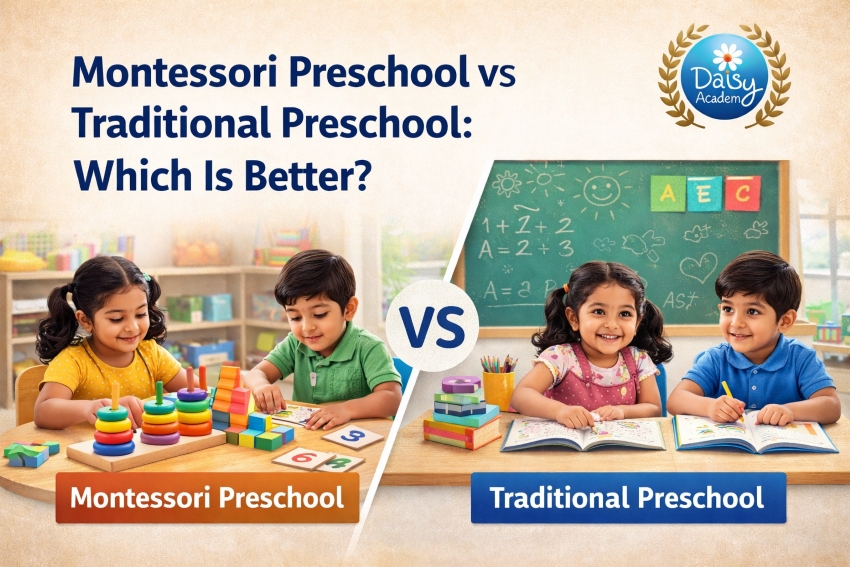
Choosing the right preschool for your child can feel overwhelming for many parents. One common question that often comes up is whether to choose a Montessori preschool or a traditional preschool. Both approaches aim to support early childhood learning, but they follow different teaching methods and philosophies.
At Daisy Montessori School, we understand that every child learns in a unique way. Knowing the differences between Montessori and traditional preschools can help parents make the best decision for their child’s early education.
Let’s explore both approaches in simple terms.
What Is a Montessori Preschool?
The Montessori method is an educational approach developed by Italian educator Maria Montessori. This method focuses on child-led learning, independence, and hands-on activities.
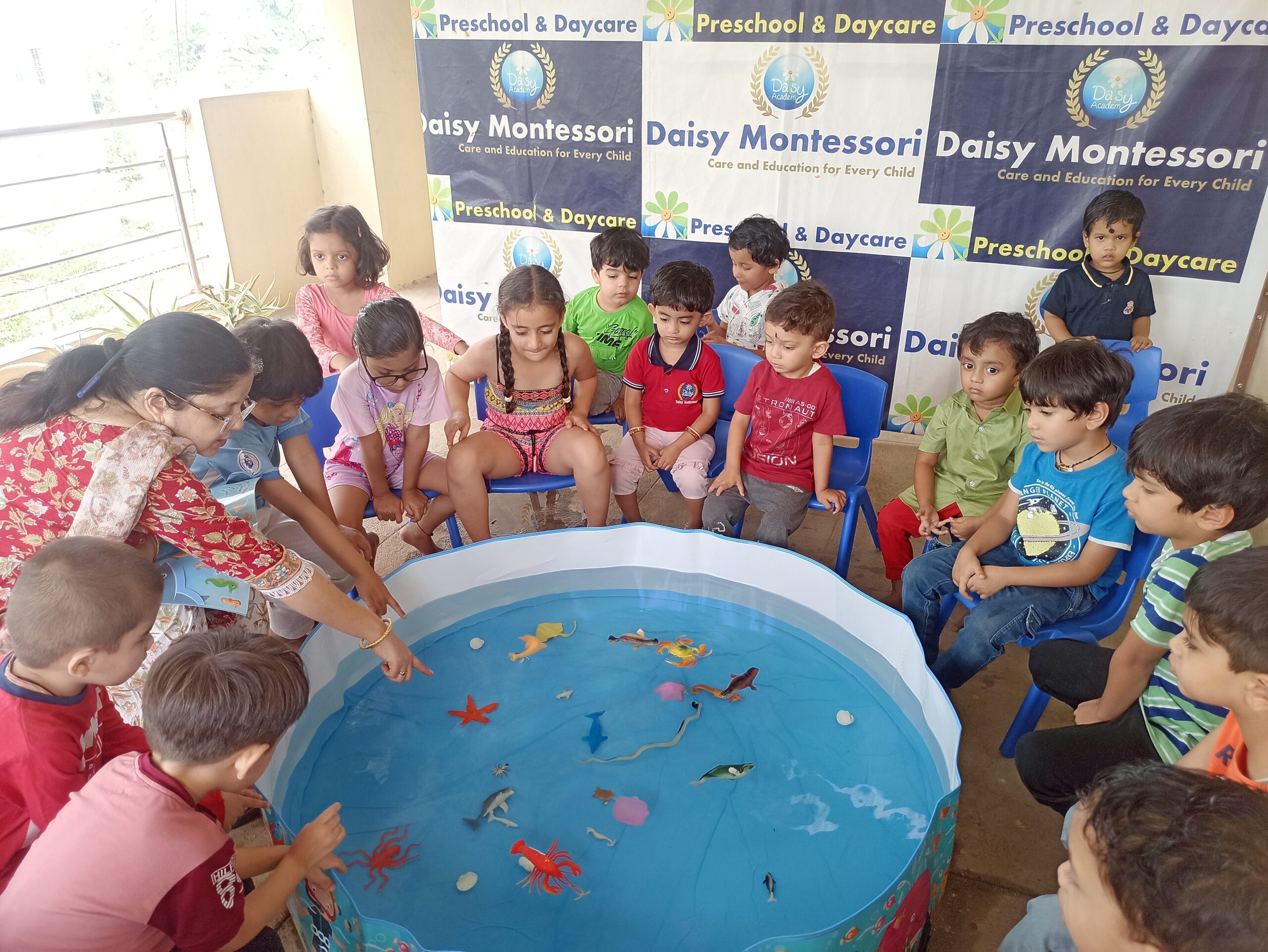
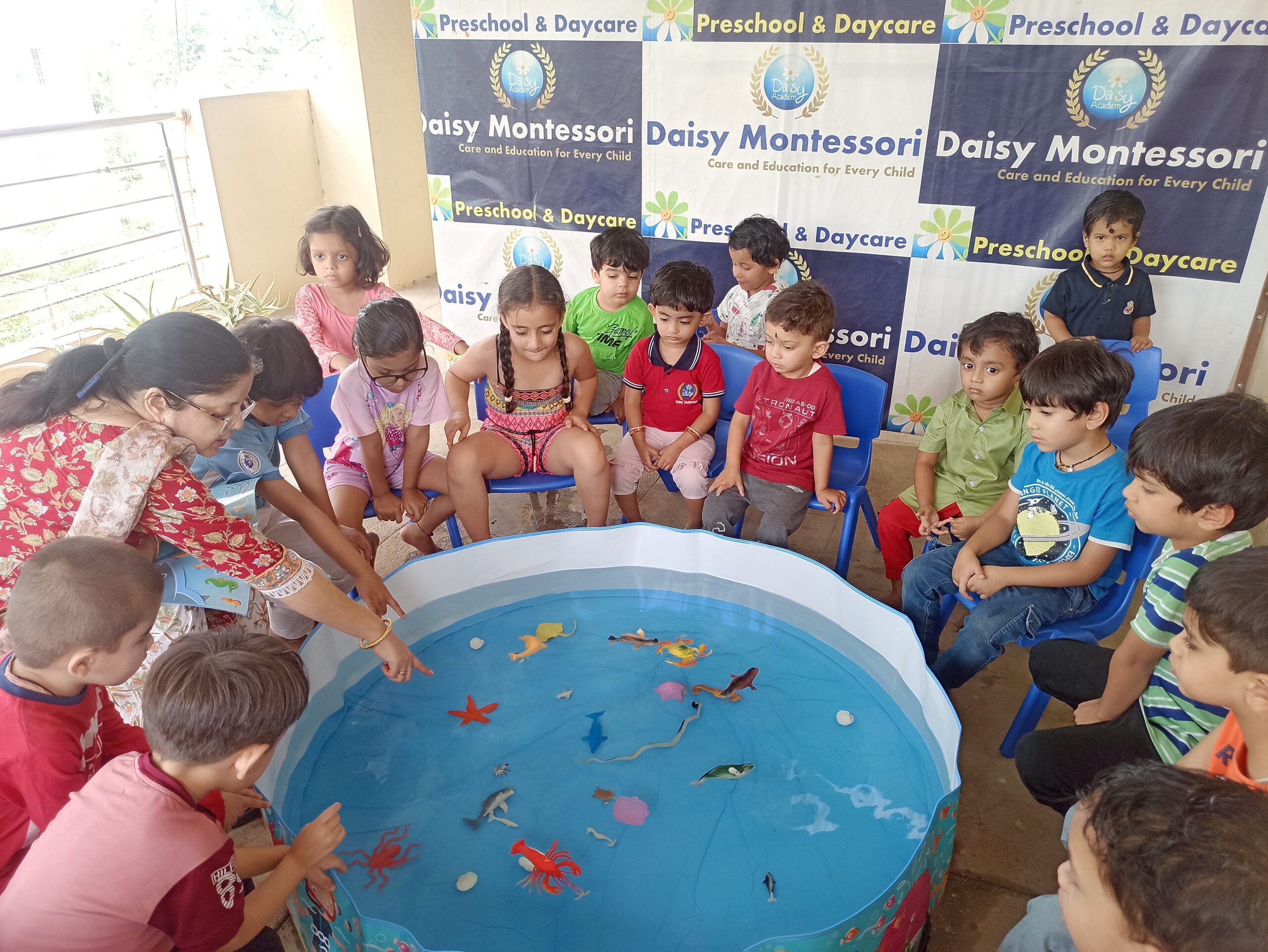
In a Montessori preschool, children are encouraged to explore, ask questions, and learn at their own pace. The classroom environment is carefully prepared with learning materials that help children develop practical life skills, creativity, and problem-solving abilities.
Key Features of Montessori Preschool
- Children learn through hands-on materials
- Students choose activities based on their interests
- Teachers act as guides rather than traditional instructors
- Mixed-age classrooms encourage peer learning
- Focus on independence and self-discipline
At Daisy Montessori School, the Montessori approach helps children develop curiosity, confidence, and a love for learning from an early age.
What Is a Traditional Preschool?
A traditional preschool usually follows a structured classroom environment where teachers lead the lessons and activities. The curriculum often focuses on basic academic skills such as letters, numbers, and shapes.
In this system, children usually learn the same activities at the same time as the rest of the class.
Key Features of Traditional Preschool
- Teacher-led lessons
- Fixed schedules and structured activities
- Same-age classrooms
- Focus on basic academic preparation
- Group learning and instruction
Traditional preschools can work well for children who thrive in structured environments and enjoy group learning.
Key Differences Between Montessori and Traditional Preschool
Understanding the major differences can help parents choose the right learning environment.
1. Learning Style
Montessori Preschool:
Children learn through exploration and hands-on activities.
Traditional Preschool:
Teachers lead lessons and guide the learning process.
2. Role of Teachers
Montessori:
Teachers act as guides who support children in discovering things on their own.
Traditional:
Teachers play the central role in delivering lessons and managing the classroom.
3. Classroom Environment
Montessori:
The classroom is designed with learning stations where children choose activities.
Traditional:
The classroom usually follows a structured layout with group activities.
4. Pace of Learning
Montessori:
Each child learns at their own pace.
Traditional:
All children generally follow the same schedule and lesson plan.
5. Focus on Independence
Montessori:
Encourages independence, responsibility, and self-learning.
Traditional:
Focuses more on group learning and teacher guidance.
Which Preschool Is Better for Your Child?
The answer depends on your child’s personality, learning style, and your educational goals as a parent.
A Montessori preschool is often a great choice for children who:
- Enjoy exploring and learning independently
- Are naturally curious
- Like hands-on activities
- Learn better at their own pace
A traditional preschool may work well for children who:
- Prefer structured routines
- Enjoy teacher-led activities
- Thrive in group learning environments
At Daisy Montessori School, the focus is on nurturing children in a supportive environment that encourages creativity, independence, and confidence.
Why Many Parents Choose Montessori Education
Over the years, Montessori education has gained popularity among parents who want their children to develop strong thinking skills and independence.
Benefits of Montessori learning include:
- Improved focus and concentration
- Strong problem-solving skills
- Greater independence
- Better social interaction
- Love for learning from an early age
At Daisy Montessori School, children learn through meaningful experiences that support both academic and emotional growth.
Final Thoughts
Both Montessori and traditional preschools aim to support early childhood development, but their approaches are different. Montessori education focuses on self-directed learning and independence, while traditional preschools follow a more structured and teacher-led model.
The best preschool for your child is the one that matches their personality and learning style. By understanding these differences, parents can make an informed decision that supports their child’s growth and happiness.
At Daisy Montessori School, we believe that every child deserves a nurturing environment where they can explore, learn, and grow with confidence.
Frequently Asked Questions (FAQs)
1. What is the main difference between Montessori and traditional preschool?
The main difference is the learning approach. Montessori focuses on child-led learning, while traditional preschools follow teacher-led instruction.
2. Is Montessori education suitable for all children?
Yes, Montessori education works well for most children because it allows them to learn at their own pace and explore their interests.
3. Do Montessori preschools focus on academics?
Yes, but academics are taught through hands-on activities and practical learning instead of rote memorization.
4. At what age can children start Montessori preschool?
Most Montessori schools accept children between the ages of 2 and 6 years, depending on the program.
5. Why do parents prefer Montessori schools?
Many parents choose Montessori schools because they encourage independence, creativity, and strong problem-solving skills from an early age.