Discipline is one of the most misunderstood aspects of early childhood education. Many parents associate it with punishment, strict rules, or fear-based obedience. Montessori changes this narrative completely. Instead of forcing children to behave, Montessori nurtures their inner ability to understand consequences, respect others, and make thoughtful choices. The goal isn’t to control children but to guide them toward becoming responsible, confident, and emotionally balanced individuals.
In Montessori classrooms, discipline isn’t something imposed on children. It is something they develop within themselves.
What Montessori Discipline Really Means
In a traditional environment, discipline often comes from external pressure — “Don’t do that!”, “Sit still!”, “If you behave, you’ll get a reward.” This approach conditions children to act based on fear or approval.
Montessori discipline is fundamentally different. It is rooted in respect, freedom within limits, and natural consequences. Instead of demanding obedience, educators help children make better decisions by understanding their actions and their impact on the environment and others.
The Montessori approach recognizes that children are naturally eager to learn, explore, and contribute to their community. Discipline emerges when they are given the tools and freedom to do this successfully.
The Prepared Environment and its Role in Discipline
Montessori discipline starts long before conflict arises. The environment itself is carefully designed to support independence and respectful behavior.
Freedom Within Clear Boundaries
Children are not allowed to do “anything they want.” Instead, they are given meaningful choices:
- “Would you like to read this book or work with the puzzle?”
- “Do you want to join the art station or continue building blocks?”
These choices allow children to exercise autonomy without chaos. They learn decision-making naturally and feel responsible for the outcomes.
Real Materials, Real Responsibility
Montessori classrooms contain tools made from wood, glass, fabric, and metal. These are real, not toy-like substitutes. When children pour water from a glass jug or handle a ceramic bowl, they know it must be handled carefully. The environment itself teaches self-control, focus, and respect without any scolding.

Guidance Over Punishment
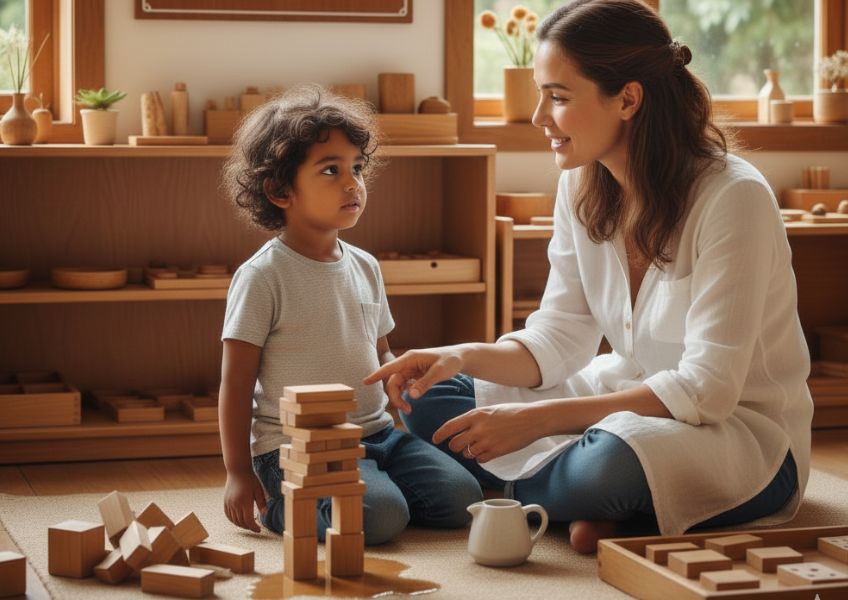
Montessori guides (teachers) do not raise their voice, shame, or threaten. They model calmness and respect. Discipline is a process of connection, not correction.
Redirecting Instead of Scolding
If a child interrupts, the guide might say:
“I see you want to talk. Let’s wait until your friend finishes speaking.”
This acknowledges feelings while reinforcing social etiquette.
Natural Consequences Instead of Punitive Rules
Rather than imposing arbitrary punishments, Montessori allows children to experience the results of their actions:
- If a child spills beads, they gently help clean them up.
- If they rush and drop water, they wipe the table.
There is no blame, no anger, just cause and effect. Children understand responsibility because they participate in it.
Building Internal Discipline and Emotional Intelligence
True discipline is not measured by compliance. It is measured by a child’s ability to self-regulate when no one is watching.
Montessori education emphasizes:
- Respect for self
- Respect for others
- Respect for the environment
Children learn to share materials, wait their turn, and engage respectfully with peers. When conflict arises, they are encouraged to express feelings, listen, and collaborate to solve the issue. Rather than disciplining “bad behavior,” Montessori nurtures emotional resilience and maturity.
This approach prepares children to navigate the world with empathy and self-awareness qualities that last long beyond early childhood.
Final Thoughts
The Montessori discipline model empowers children rather than restraining them. It replaces punishment with guidance, fear with understanding, and control with cooperation. By developing internal discipline, children learn not just how to behave, but why a lesson that builds character, compassion, and lifelong independence.
For parents seeking an environment that nurtures respectful, confident, and emotionally strong children, Daisy Montessori School stands as the best Montessori preschool in Bangalore.